

 Pol.
Pol. Esp.
Esp.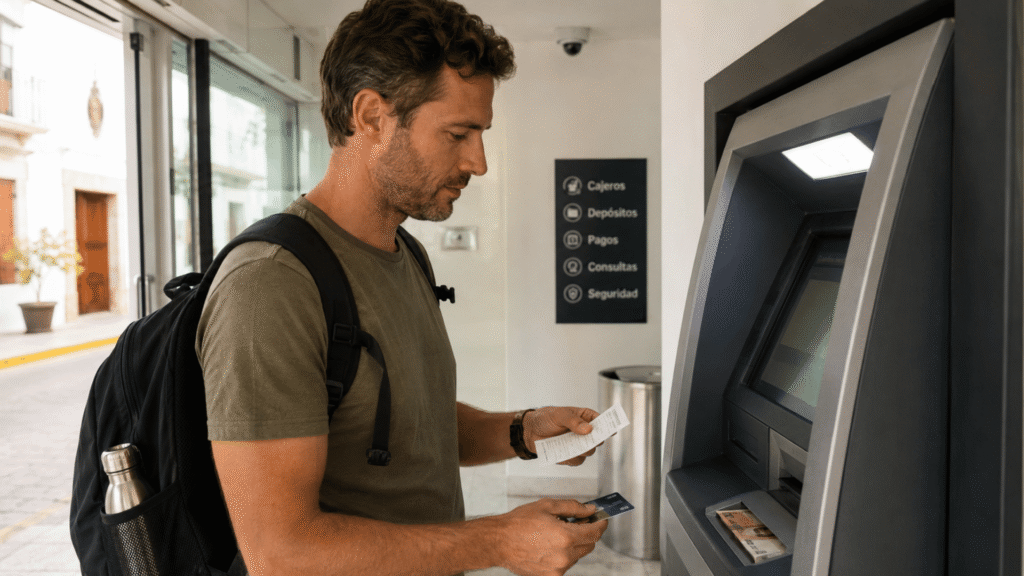
It is a good idea to carry some cash in Mexican pesos, although you don’t need to pay for everything that way. In cities and tourist areas, credit cards are generally widely accepted, but markets, small shops, tips, and some everyday expenses may require cash. The most practical approach is to combine both payment methods.
Contents
Don’t rely on just one payment method
Traveling with only cash isn’t recommended, but relying solely on a credit card doesn’t always work out well either.
In Mexico, credit and debit cards are commonly accepted in cities, hotels, restaurants, and established businesses. However, there are still situations in which paying with pesos is much easier.
The practical recommendation is to carry a moderate amount of cash and keep a card as your primary or secondary form of payment.
Visit México notes that it’s important to have some pesos on hand for small, everyday expenses, even when traveling in tourist areas.
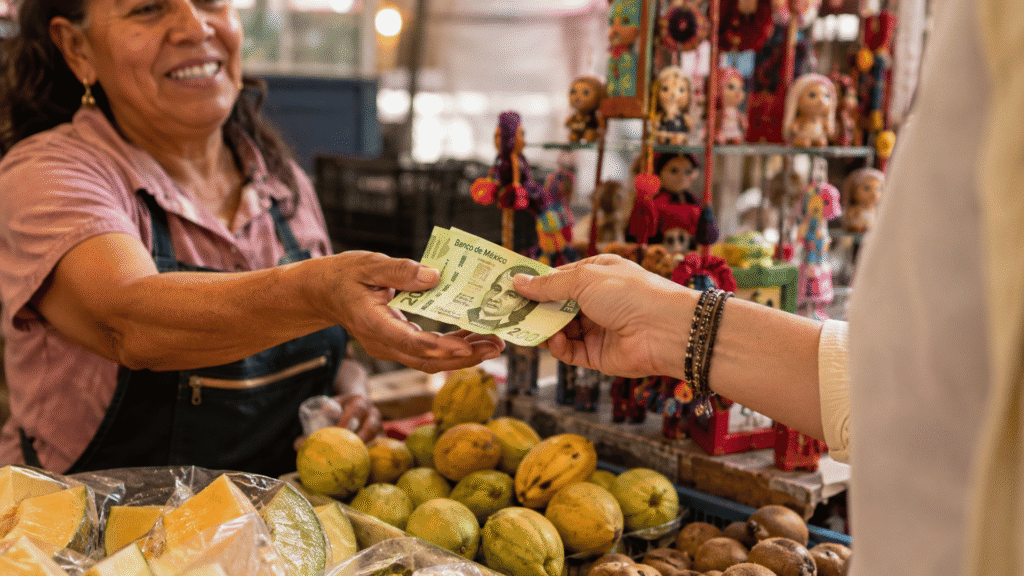
When will you need cash?
Cash is often useful at traditional markets, small restaurants, food stalls, when buying handmade goods, for tips, or at establishments that don’t have a credit card terminal.
It can also be convenient when visiting small towns or cultural destinations outside major urban areas.
This doesn’t mean you need to carry large amounts of cash. In fact, spreading out your money and withdrawing only what you need may be a better strategy than traveling with your entire budget in cash.
Can I pay with a credit card in Mexico?
Yes. Credit cards are widely accepted in cities and major tourist destinations.
Before traveling, it’s a good idea to check with your bank to see if there are any fees for international purchases, currency conversion, or ATM withdrawals.
It’s also a good idea to carry more than one form of payment. A second card kept separately can come in handy in case your main card is blocked, lost, or malfunctions.
Is it better to withdraw pesos from an ATM?
Withdrawing money from an ATM can be a convenient way to get pesos while traveling. Visit México even points out that, for many visitors, it may be more convenient than exchanging large amounts of money in advance.
However, each bank may charge fees, and your own financial institution may also charge fees for international withdrawals.
For security reasons, it is advisable to use ATMs located inside banks, shopping centers, or busy areas and to avoid withdrawing large amounts. Official recommendations also warn about possible card-skimming devices.
Is it a good idea to bring dollars?
The official currency of Mexico is the Mexican peso.
Some tourist destinations may accept U.S. dollars, but that doesn’t mean it’s the most convenient option. Visit Mexico warns that the exchange rates offered directly by merchants may be less favorable.
For everyday expenses, paying directly in pesos is usually simpler and avoids having to rely on the exchange rate that each business chooses to apply.
How much cash should you carry with you?
There is no universal amount because it depends on the itinerary, the type of lodging, the activities, and the travel style.
A sensible strategy is to bring only what you need for daily expenses and keep the rest of your budget available on your card.
If you plan to visit markets, towns, artisan districts, or go on tours outside of major cities, it might be a good idea to carry a little more cash.
For a trip focused on hotels, restaurants, and urban attractions, you’ll probably need less.
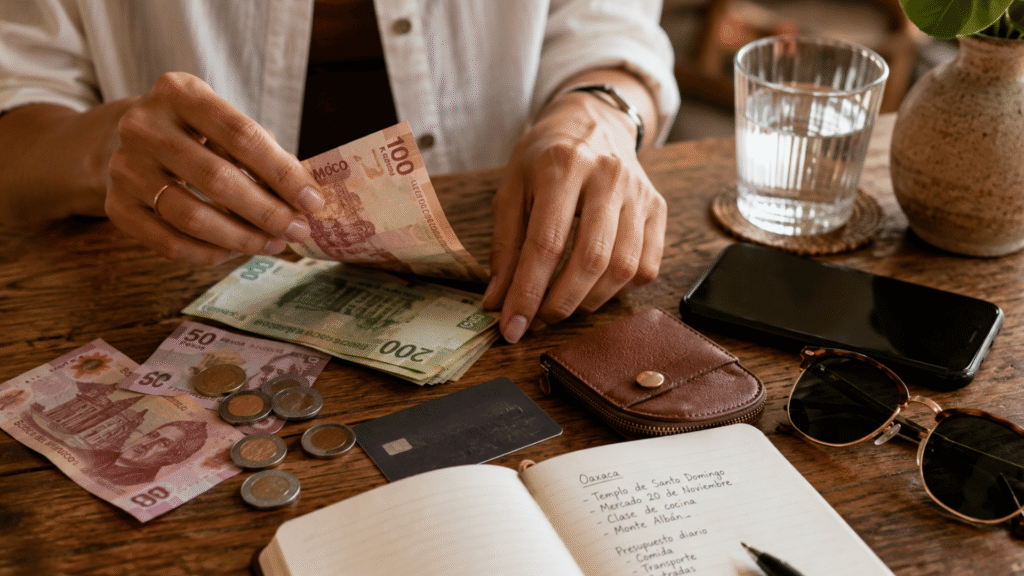
Some Mistakes That Are Easy to Avoid
One of the most common mistakes is bringing too much foreign currency, thinking it will be accepted everywhere.
Another is withdrawing too much cash at once.
It’s also a good idea to avoid relying solely on one card and finding out during your trip that the bank blocked it because it detected international transactions.
Before you leave, checking the fees, withdrawal limits, and contact information for your bank can help you avoid simple problems.
A combination usually works best
For most travelers, the best solution is simple: Mexican pesos for small purchases and a card for larger payments.
The ratio will depend on the route.
A traveler visiting Mexico City can easily find an ATM. On a cultural tour that includes markets, communities, small towns, or small businesses, cash may become more important.
Jaguar Tours can provide travelers with information about the practical details of each itinerary—including transportation and types of destinations—so they can be better prepared before starting their trip.
Frequently Asked Questions
Do I need to exchange money before I arrive in Mexico?
Not necessarily. There are banks, currency exchange offices, and ATMs at airports, in cities, and in tourist areas. It’s a good idea to compare rates and avoid exchanging your entire budget all at once.
Do you accept U.S. dollars?
Some businesses in tourist areas may accept them, but the official currency is the Mexican peso, and the exchange rate offered by a business may not be very favorable.
Is it safe to use ATMs?
They can be used, but it is best to choose ATMs in safe, crowded, and well-lit locations—ideally inside banks or legitimate establishments.
References
Visit Mexico – Frequently Asked Questions
Practical information on currency, credit cards, currency exchange, and using ATMs.
https://visitmexico.com/en/pagina/preguntas-frecuentes
Visit Mexico – Frequently Asked Questions
Information in Spanish about currency exchange and ATMs.
https://visitmexico.com/es/pagina/preguntas-frecuentes
U.S. Department of State – Mexico Travel Advisory
Recommendations regarding currency, credit cards, ATMs, and preventing card skimming.
https://travel.state.gov/en/international-travel/travel-advisories/mexico.html
UK Government – Mexico: Safety and Security
Recommendations on using ATMs and withdrawing cash while traveling.
https://www.gov.uk/foreign-travel-advice/mexico/safety-and-security
Bank of Mexico – Information on fees and payment systems
Information from the Mexican central bank regarding cards and ATMs.
https://www.banxico.org.mx/sistemas-de-pago/cuotas-intercambio-comisiones.html
