

 Pol.
Pol. Esp.
Esp.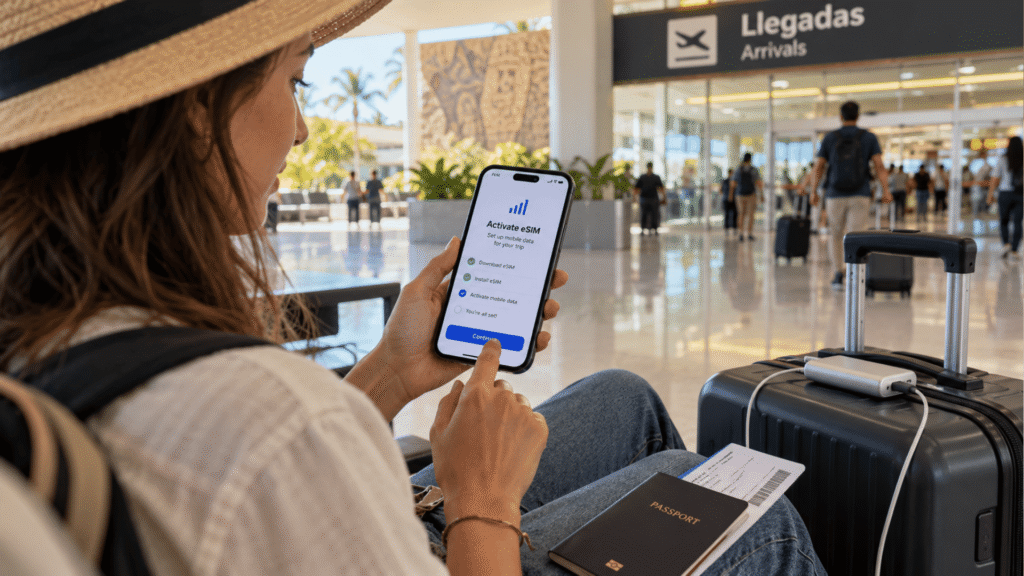
Having mobile data in Mexico makes traveling much easier: you can use maps, order rides, check reservations, translate information, or contact hotels and tour operators. For many travelers, an eSIM is the simplest option; a physical SIM card is still useful if your phone isn’t compatible. Relying solely on Wi-Fi is usually less practical.
Contents
Relying solely on Wi-Fi can cause problems
Hotels, restaurants, and airports usually have Wi-Fi, but that doesn’t mean you can rely on it throughout your entire trip.
The problem arises when you need to book a ride, find an address, let someone know you’ll be late, or check a reservation while you’re out and about.
That’s why, for most international travelers, it’s a good idea to have some form of mobile data active from the start of your trip.
Physical SIM or eSIM?
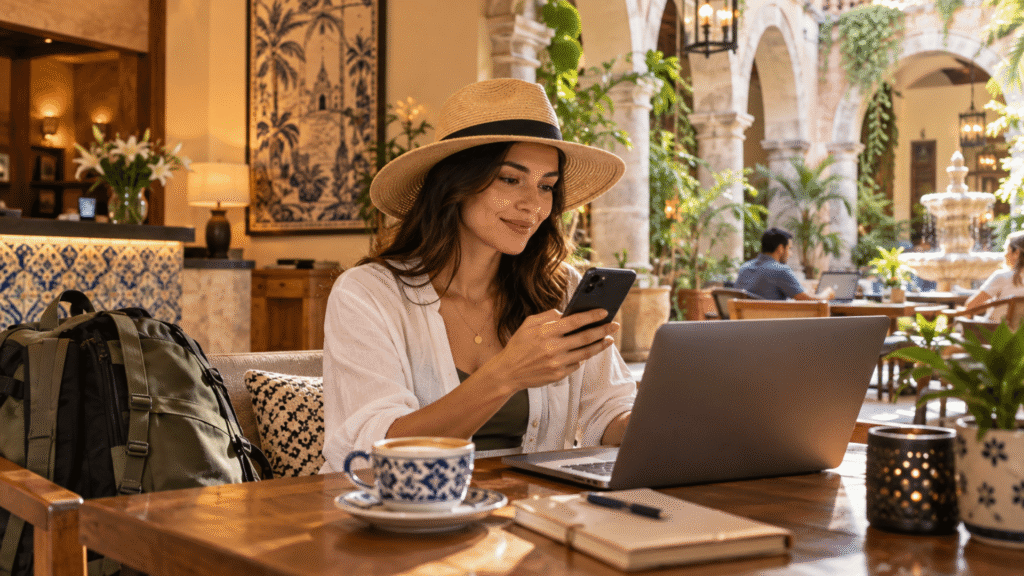
An eSIM lets you activate a mobile line without inserting a physical card. Its main advantage is convenience: you can sign up for it, install it, and keep your regular SIM in your phone if your device supports both.
In Mexico, there are already carriers offering prepaid eSIMs and options specifically for visitors. Telcel, AT&T, and Movistar currently offer eSIM options, although the terms, compatibility, and activation processes vary by carrier.
A physical SIM card is still a good option when your phone doesn’t support eSIM or when you’d rather purchase service after you arrive.
Check your phone before buying
Not all eSIMs work on all devices.
Before paying, check two things: that your phone is compatible with eSIM and that it’s unlocked to use other carriers’ networks.
Telcel, for example, explicitly states that its eSIM for tourists requires a compatible, unlocked device. Movistar also publishes a list of compatible devices.
Checking this before your trip prevents you from purchasing a service that you won’t be able to install later.
A Major Change in Mexico Starting in 2026
There’s one detail travelers should be aware of.
Starting in January 2026, Mexican cell phone lines must be registered in the user’s name. In the case of Telcel’s tourist eSIM, for example, the process requires registering the line and verifying the user’s identity with a valid passport before using the service.
This makes it even more important to check the current requirements of your chosen carrier before purchasing a local SIM or eSIM.
How much data do you really need?
There’s no one-size-fits-all answer.
If you’ll mainly be using maps, messaging, email, reservations, and transportation, your data usage will likely be moderate.
If you also plan to post videos, make video calls, share your internet connection with other devices, or use social media constantly, you’ll need significantly more.
Instead of simply buying the plan with the most gigabytes, think about how you’ll use your phone during your trip.
What happens to WhatsApp if you switch SIM cards?
Changing your SIM card or adding an eSIM doesn’t necessarily mean you have to switch your WhatsApp account.
On many phones, you can keep your usual WhatsApp number while using another line solely for mobile data.
Before traveling, avoid changing the number associated with your apps unless you really need to.
Download a few things before leaving the hotel
Even if you have mobile data, it’s a good idea to prepare your phone to work offline.
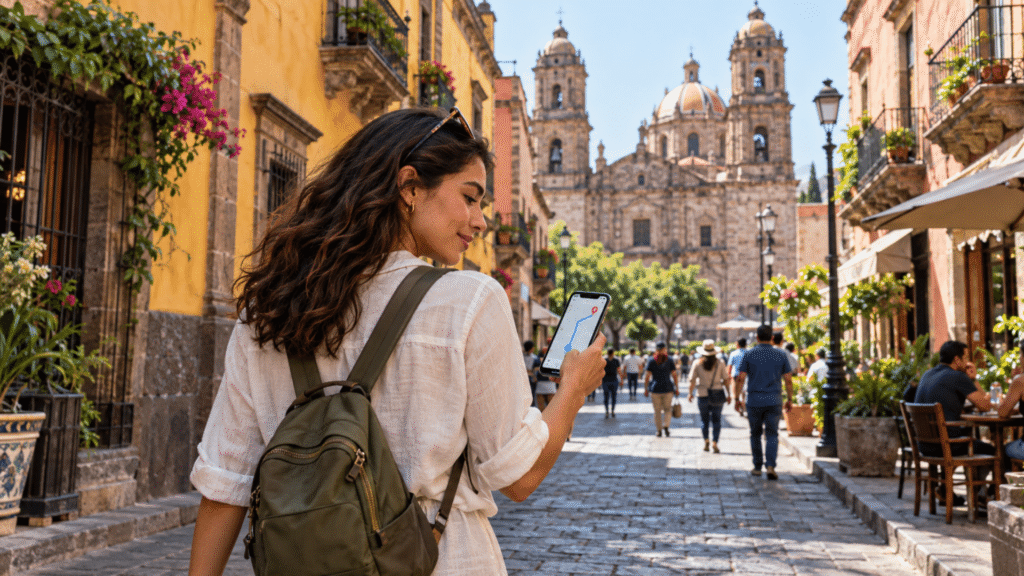
Downloading maps of the areas you’ll be visiting, saving your reservations, taking screenshots of important addresses, and keeping your travel documents on hand can help you when the signal is weak.
This is especially useful on highways, at archaeological sites, in small towns, or on trips outside major cities.
Do you need internet access all the time?
Probably not, but it is useful to have it available.
A tour of Mexico City may require maps, transportation, and communication several times throughout the day. On organized tours, you might use less data because much of the logistics are already taken care of.
Jaguar Tours can provide clear information on schedules, meeting points, and transfers so that travelers rely less on improvisation during the tour.
Frequently Asked Questions
Is it better to buy an eSIM before traveling?
It can be convenient, especially if you want to have service shortly after arriving. However, check when the plan’s validity period begins, because some services start counting from the time of installation or activation.
Do I need to unlock my phone?
If you’re going to use a SIM or eSIM from another carrier, you’ll usually need an unlocked device.
Can I use my regular number and a Mexican eSIM?
On many dual-SIM phones, yes. You can keep your usual number and use the second slot for data, depending on your device’s settings.
Is the hotel’s Wi-Fi enough?
It may be enough when you’re inside your accommodation, but it’s limited for maps, transportation, and communication while you’re exploring the city.
References
Telcel – eSIM for Tourists
https://www.telcel.com/viajar-a-mexico/esim
AT&T Mexico – AT&T Go Prepaid eSIM
https://www.att.com.mx/planes/prepago/att-go/
Movistar Mexico – eSIM
https://www.movistar.com.mx/esim
