

 Pol.
Pol. Esp.
Esp.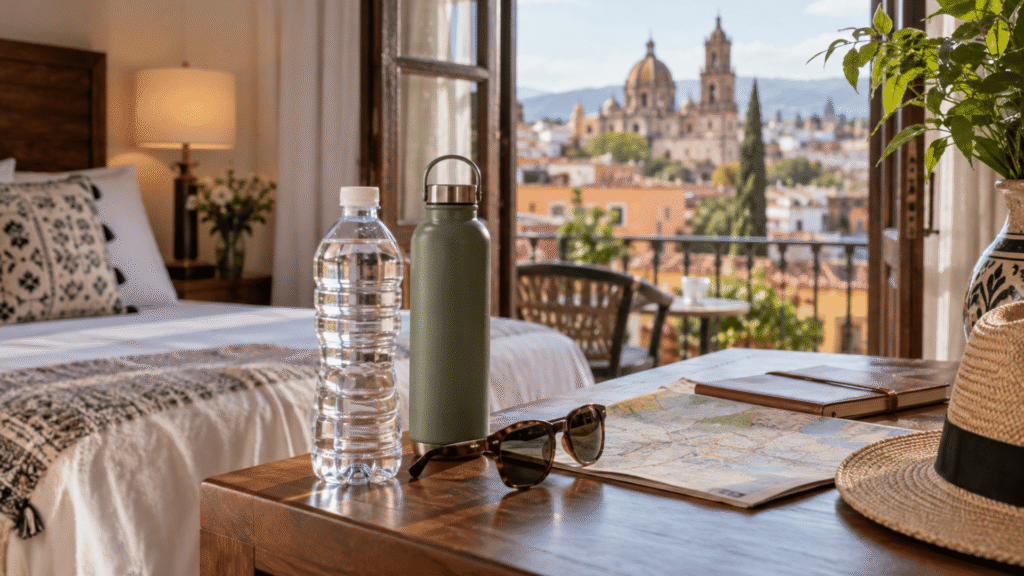
For international travelers, it is safest in Mexico not to assume that tap water is safe to drink. Water quality and treatment can vary depending on the destination and the property. Drinking sealed bottled water, eating well-cooked food, and exercising caution with ice, fruit, and street food can help prevent problems during your trip.
Contents
Water quality can vary from place to place
One of the most frequently asked questions before traveling to Mexico is whether you can drink directly from the tap.
It’s not advisable to give a simple yes or no answer for the entire country. Conditions can vary by location, water supply system, and building.
For a visitor unfamiliar with the water system at their lodging, using bottled water with an unbroken seal is usually the simplest option.
You can also ask directly at the hotel or lodging to see if they have purified water available for guests.
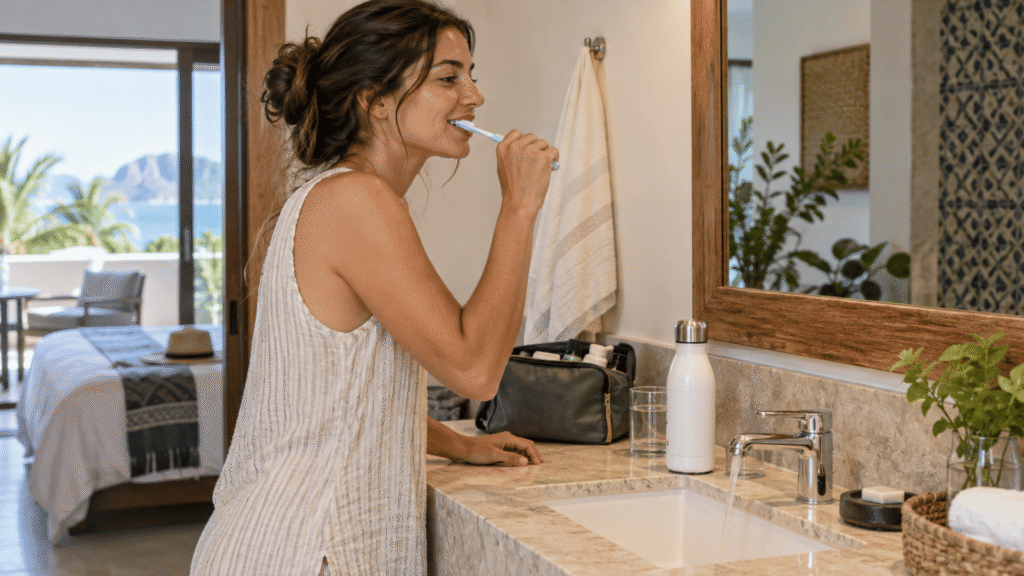
Should you also be careful when brushing your teeth?
When you’re unsure about the water quality, it’s wise to use bottled or pre-treated water to brush your teeth.
Water isn’t just a concern when you drink it. It can also come into contact with food, beverages, or ice.
This kind of precaution is especially useful during the first few days of your trip, while you’re getting to know the conditions at your accommodations better.
What about ice from restaurants and hotels?
It’s best to avoid making generalizations here.
Many restaurants and hotels use ice made from purified water. If you have any doubts, it’s perfectly reasonable to ask.
This doesn’t mean you should avoid any drinks with ice throughout your entire trip, but rather that you should assess the establishment and confirm the ice’s source when there’s uncertainty.
Should you avoid street food?
Not necessarily.
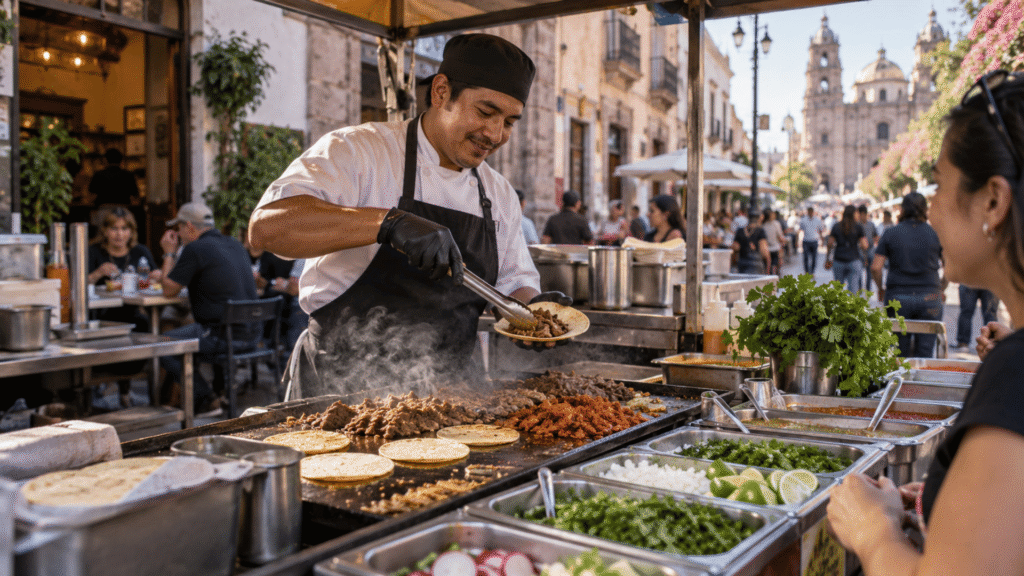
Street food is an important part of the culinary experience in Mexico. The most useful guideline isn’t to choose between “street” and “restaurant,” but to observe how the food is prepared and stored.
A good sign is when the food is cooked right in front of you and served hot.
You can also check to see if the stand has a steady stream of customers, reasonably clean surfaces, and food that’s covered.
A place with good turnover tends to keep ingredients moving and reduce the time they spend sitting out.
Fruits, Vegetables, and Markets: What to Do
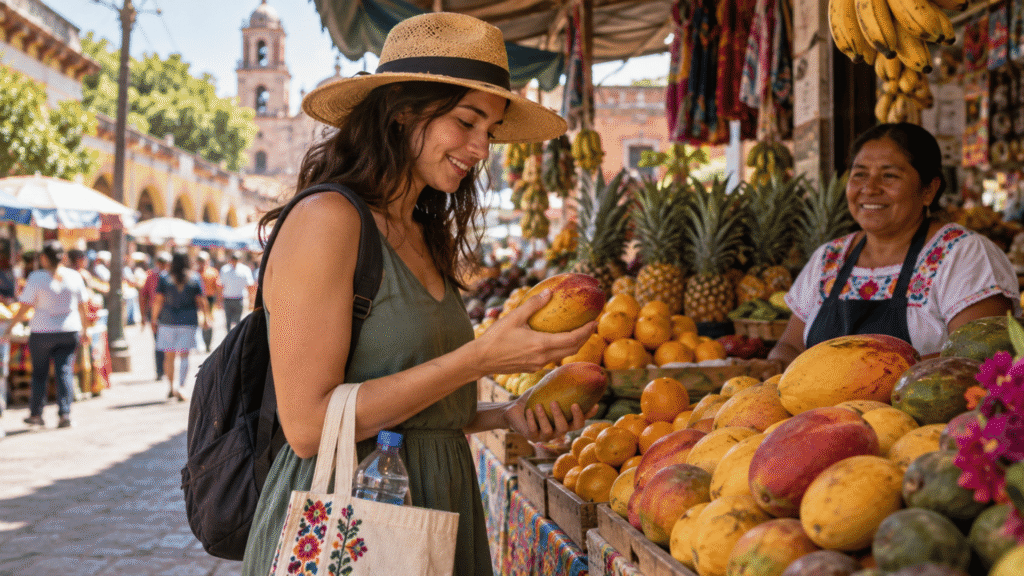
Mexico has a huge variety of fruits, markets, and fresh produce, and it wouldn’t make sense to avoid them entirely.
To minimize risks, it’s best to choose fruits you can peel yourself or produce that has been washed with safe water.
With raw vegetables, salads, and foods whose preparation you’re unfamiliar with, it’s best to be a little more careful.
If you buy fruit at a market to eat later, washing or peeling it yourself gives you more control.
You don’t need to be afraid to try the local cuisine
Taking precautions doesn’t mean traveling in fear of eating.
Tacos, markets, regional cuisine, and small restaurants are all part of a cultural journey through Mexico. The goal is to follow simple guidelines: freshly prepared food, good hygiene, safe water, and busy establishments.
It also helps to wash your hands before eating or use hand sanitizer when soap and water aren’t available.
Bring water with you on long trips
When visiting archaeological sites, going on excursions, or spending extended periods of time outdoors, it’s a good idea to bring enough water with you from the start.
Teotihuacán is a good example: walking, the sun, and time spent in open spaces can increase your need for hydration.
A reusable water bottle works well when you know you’ll be able to refill it with purified water. If you’re not sure, it’s more practical to buy bottled water.
Eating well is also part of planning your itinerary
A schedule that’s too tight can lead travelers to eat at odd hours or choose restaurants simply because they’re nearby.
Allowing adequate time for meals, hydration, and rest is also part of a well-organized trip.
Jaguar Tours can help design cultural itineraries and tours throughout Mexico, taking into account not only the attractions and transportation but also a pace that allows you to fully enjoy the experience.
Frequently Asked Questions
Can I drink tap water at a hotel?
It’s best to ask the hotel directly. When you don’t know the quality or treatment of the water, a safe option is to use purified or sealed bottled water.
Is ice in Mexico always unsafe?
No. Many establishments use ice made from purified water. If you have any doubts about where it comes from, ask before consuming it.
Should I avoid street tacos?
Not necessarily. Choose stands where food is cooked fresh, served hot, and there’s a steady flow of customers.
What should I do if I have a sensitive stomach?
You can start your trip with simpler foods, avoid raw foods whose preparation you’re unfamiliar with, and stay well-hydrated. If you experience severe or persistent symptoms, it’s advisable to seek medical attention.
References
CDC – Food and Drink Considerations When Traveling
https://wwwnc.cdc.gov/travel/page/food-water-safety
CDC – Avoid Contaminated Water While Traveling
https://wwwnc.cdc.gov/travel/page/water-disinfection
CDC – Mexico: Traveler View
https://wwwnc.cdc.gov/travel/destinations/traveler/none/mexico
CDC – Traveler’s Diarrhea
https://wwwnc.cdc.gov/travel/page/travelers-diarrhea-es
COFEPRIS – Environmental Health and Water Monitoring
https://www.gob.mx/cofepris/acciones-y-programas/salud-ambiental-incluyendo-la-calidad-de-vida
